Rotate
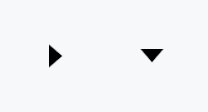
Rotate — wraps a child and applies a 2D rotation to its entire
subtree, driven by an external Prop<f32> of radians. Layout-
stable: the wrapper reports the child's natural size at all
angles; only the visual content rotates within the slot.
let angle = ctx.animated_signal(0.0);
ctx.add(Rotate::new(angle.clone()).child(chevron));
// Animate to 90° on expand:
angle.animate_to(std::f32::consts::FRAC_PI_2, Duration::from_millis(150), Easing::EaseOut);
No internal animation — the caller owns the angle signal and pairs
it with Signal::animate_to (or ctx.animate()) for animated
rotations. This keeps the widget composable: bind it to interaction
state for hover-on rotation, to an animated signal for spinning
loaders, to a constant for static decorative rotation.
Use cases: animated chevrons (the disclosure-state pattern, today
faked by visibility-toggling two static chevron icons), spinning
loaders not covered by Spinner, "shake your
head no" rotation feedback, dial controls.
Reduced motion
Rotate doesn't introduce motion — it just applies whatever the
caller's angle signal currently holds. Reduced-motion handling
belongs at the caller's animate_to site (use to_or_snap or
gate the animation behind prefers_reduced_motion).
Builder methods at a glance
origin, child, child_id
API reference
📖 Full rustdoc API for this module
pub struct Rotate
Wraps a child widget and rotates its entire subtree by an externally-driven angle in radians.
#![allow(unused)]
fn main() {
pub struct Rotate { /* fields */ }
}
Methods
pub fn new(angle: impl Into<Prop<f32>>) -> Self
Create a rotate wrapper bound to angle (radians); accepts a
static f32 or a reactive Signal<f32>. Default pivot: Center.
pub fn origin(mut self, origin: ScaleOrigin) -> Self
Pivot point for the rotation. Default Center.
pub fn child(mut self, widget: impl Widget + 'static) -> Self
Inline child widget (deferred insertion).
pub fn child_id(mut self, id: WidgetId) -> Self
Pre-registered child by WidgetId.